00Services

Ten services, one delivery capability

Each service below describes what it includes, the business needs it addresses, the deliverables you receive, how we work and how quality is verified. Services can be engaged individually or combined into complete delivery of a system.

01

Custom software development

Systems designed around one organisation's process instead of a generic product template.

What the service includes

  • Requirement analysis and domain modelling
  • Architecture definition and technology selection
  • Backend services, business logic and data layer
  • Administrative interfaces and role-based access
  • Reporting, exports and audit trails

Main deliverables

  • Working system deployed to the agreed environments
  • Source code repository with full history
  • Architecture and data model documentation
  • Automated test suite and CI configuration
  • Operational runbook for the delivered system

Typical business needs

Companies whose work no longer fits packaged software: unusual approval chains, product-specific calculations, regulatory records, or processes spread across spreadsheets and disconnected tools.

Working approach

We begin with the data and the rules that govern it, then build the smallest system that supports the real process end to end. Functionality is added in increments that are demonstrated and reviewed, so the scope stays connected to what the business actually needs.

Quality considerations

Business rules are covered by automated tests, edge cases are captured from real examples rather than assumptions, and every release is reproducible from source.
02

Web application development

Browser-based platforms, portals and dashboards intended for long working sessions.

What the service includes

  • Frontend architecture and component systems
  • API design and integration
  • Authentication, permissions and session handling
  • Accessibility and responsive behaviour
  • Performance budgeting and rendering optimisation

Main deliverables

  • Deployed web application with staging environment
  • Reusable component library and design tokens
  • API documentation
  • Automated end-to-end tests for critical flows
  • Performance and accessibility report

Typical business needs

Organisations that need a customer portal, an internal operations tool, a data-heavy dashboard, or a public platform that must remain fast and usable on a wide range of devices and connections.

Working approach

Interface structure is agreed before implementation. We build a component system first so screens stay consistent, then wire it to the API with explicit loading, empty and error states for every view.

Quality considerations

Keyboard navigation, colour contrast and screen-reader semantics are checked during development. Performance is measured against defined budgets rather than judged by feel.

03

Mobile application development

Applications for iOS and Android that behave correctly outside ideal conditions.

What the service includes

  • Native and cross-platform development
  • Offline storage and synchronisation logic
  • Device capability integration such as camera, location and notifications
  • Store submission preparation and release management
  • Crash reporting and usage diagnostics

Main deliverables

  • Application builds for the agreed platforms
  • Store listing assets and submission support
  • Synchronisation and data handling documentation
  • Automated and device-level test results
  • Release and versioning process

Typical business needs

Teams working in the field, on production floors or in transit, and businesses whose customers expect an application rather than a website.

Working approach

We define the offline model first, because it determines the data structures and conflict rules. Builds are distributed to testers early and iterated with real devices, not only simulators.

Quality considerations

Testing covers older operating system versions, small screens, interrupted connections and low battery conditions. Crash and error reporting is configured before the first release.

04

UI/UX design

Interface structure and interaction patterns grounded in actual workflows.

What the service includes

  • Workflow mapping and information architecture
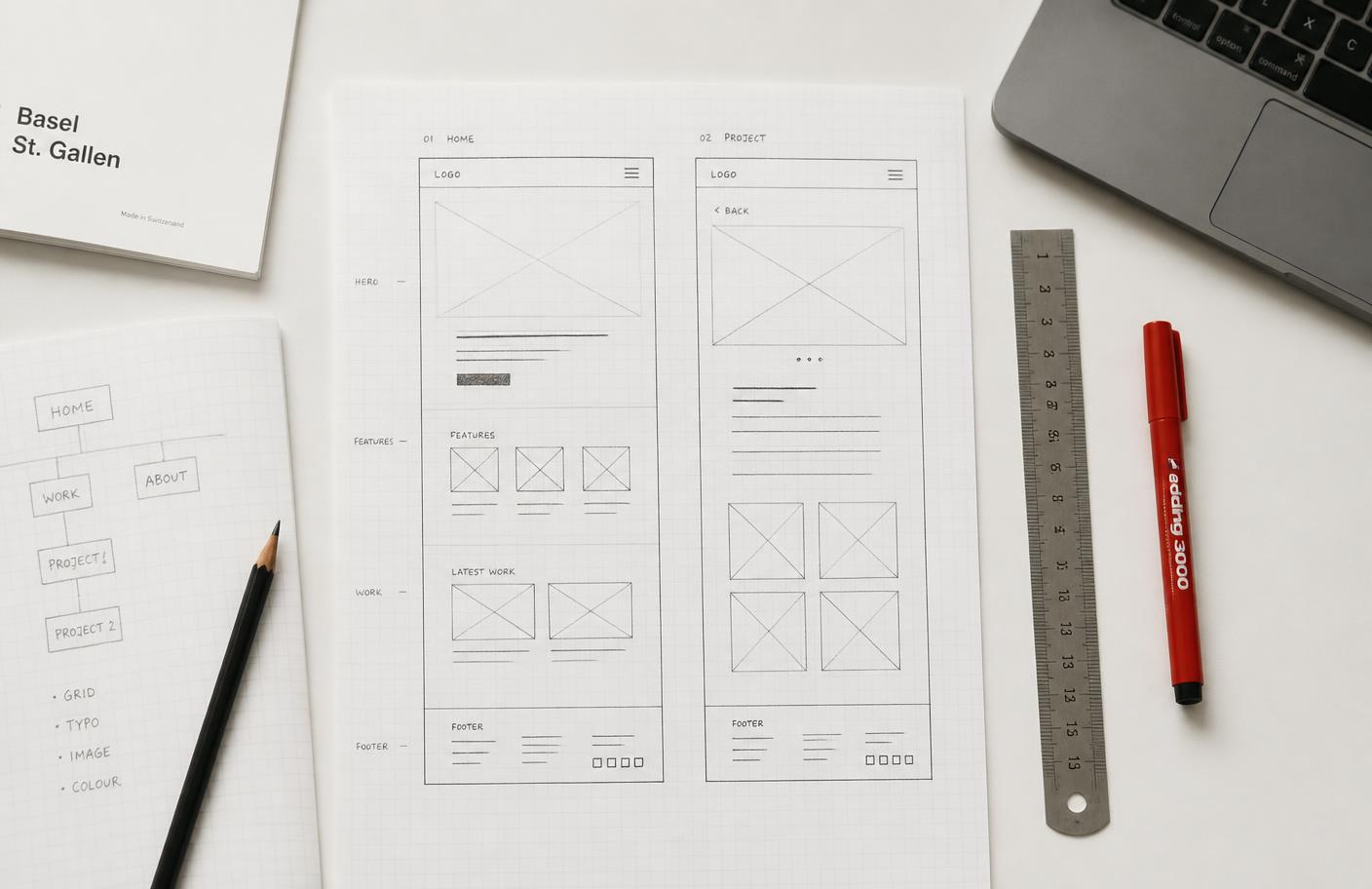
  • Wireframes and interaction specifications
  • Visual design and design system definition
  • Prototypes for review before implementation
  • Accessibility guidelines and component states

Main deliverables

  • Wireframes and screen specifications
  • Design system with components, type scale and colour tokens
  • Interactive prototype of primary flows
  • Accessibility and behaviour notes for developers

Typical business needs

Products where users make repeated decisions under time pressure, interfaces that have grown inconsistent over time, or new systems that need a defined structure before development begins.

Working approach

Design starts from the task, not the screen. We map what a user is trying to complete, remove steps that do not contribute, and only then define layout and visual treatment.

Quality considerations

Every component is specified with its states — default, focus, loading, empty, error and disabled — so implementation does not require guesswork.

05

Cloud solutions

Cloud architecture, migration and infrastructure designed with cost in view.

What the service includes

  • Cloud architecture design and environment planning
  • Migration of existing workloads
  • Containerised and serverless service design
  • Backup, recovery and availability planning
  • Cost analysis and resource right-sizing

Main deliverables

  • Documented target architecture
  • Infrastructure as code definitions
  • Migration plan with rollback steps
  • Backup and recovery procedures with tested restores
  • Cost baseline and monitoring dashboards

Typical business needs

Organisations moving away from unmanaged servers, teams whose cloud costs have grown without explanation, and systems that need reliable scaling for uneven load.

Working approach

We map the existing workload before proposing a target state, migrate in stages that can each be reversed, and validate performance and cost after each stage.

Quality considerations

Recovery procedures are tested, not just written. Architecture decisions record the trade-off between availability, complexity and cost.

06

DevOps and infrastructure

Predictable release mechanics and infrastructure that can be rebuilt from code.

What the service includes

  • CI/CD pipeline design and implementation
  • Infrastructure as code and environment parity
  • Container orchestration and deployment strategies
  • Monitoring, logging and alerting
  • Secret management and access control

Main deliverables

  • Automated build, test and deployment pipelines
  • Reproducible environment definitions
  • Monitoring dashboards and alert rules
  • Incident response runbook

Typical business needs

Teams where deployment is manual, slow or nerve-racking, environments that drift apart, and systems where problems are discovered by users rather than by monitoring.

Working approach

We automate the existing process before improving it, so behaviour is preserved and understood. Environments are then aligned and deployment becomes a repeatable, logged operation.

Quality considerations

Pipelines fail loudly and early. Every deployment is traceable to a commit, and rollback is a tested procedure rather than an improvisation.

07

IT consulting

Independent technical assessment for decisions with long-term consequences.

What the service includes

  • Architecture and codebase review
  • Technology and platform evaluation
  • Delivery process assessment
  • Technical due diligence support
  • Roadmap definition and prioritisation

Main deliverables

  • Written assessment with findings and evidence
  • Prioritised recommendations with effort indications
  • Options comparison with stated trade-offs
  • Roadmap for the agreed direction

Typical business needs

Organisations choosing between rebuild and refactor, evaluating a vendor or platform, preparing for growth, or trying to understand why delivery has slowed.

Working approach

We examine the code, infrastructure and process directly and speak with the people working in them. Conclusions are supported by what we found, and alternatives are presented rather than a single mandated answer.

Quality considerations

Findings separate fact from interpretation, and every recommendation states its assumptions so it can be re-evaluated as conditions change.

08

Quality assurance and software testing

Test strategy and automation that make release decisions evidence-based.

What the service includes

  • Test strategy and coverage planning
  • Automated unit, integration and end-to-end tests
  • Regression suites and release verification
  • Performance and load testing
  • Exploratory and usability testing

Main deliverables

  • Documented test strategy
  • Automated test suites integrated into CI
  • Defect reports with reproduction steps
  • Release verification checklist and results

Typical business needs

Products where regressions keep returning, releases that require long manual checks, or systems entering a phase where failure has a direct business cost.

Working approach

Coverage is concentrated where failure is most expensive. Automated tests handle repetition; human testing is reserved for judgement, usability and unexpected behaviour.

Quality considerations

Every reported defect is reproduced before it is fixed and covered by a test afterwards, so the same failure does not return unnoticed.

09

System integration

Dependable data exchange between applications, services and external providers.

What the service includes

  • Integration architecture and contract definition
  • API and message-based interfaces
  • Data mapping, transformation and validation
  • Error handling, retries and reconciliation
  • Monitoring of integration health

Main deliverables

  • Integration design and interface contracts
  • Implemented and deployed integration services
  • Data mapping documentation
  • Monitoring, alerting and reconciliation reports

Typical business needs

Businesses running several systems that hold overlapping data, teams replacing manual transfers, and products that depend on third-party services.

Working approach

We define the contract and failure behaviour before writing transfer logic. Integrations assume that networks and partner systems will fail, and handle that explicitly.

Quality considerations

Transfers are idempotent where possible, failures are retried with limits, and discrepancies are surfaced through reconciliation rather than discovered later.

10

Maintenance and technical support

Continuous care of live systems after the first release.

What the service includes

  • Monitoring and incident response
  • Dependency and security updates
  • Bug fixing and performance tuning
  • Small feature development in agreed cycles
  • Documentation upkeep

Main deliverables

  • Agreed response process and communication channel
  • Regular update and patch cycles
  • Incident reports with root cause analysis
  • Periodic system health summaries

Typical business needs

Organisations running business-critical software without an internal team to maintain it, or teams that need a reliable second line of support.

Working approach

Support begins with a review of the current state: dependencies, monitoring, backups and known weaknesses. Urgent risks are addressed first, then maintenance settles into a predictable rhythm.

Quality considerations

Incidents are documented with cause and correction. Recurring issues are traced to their source instead of being patched repeatedly.

11  Delivery process

From scope to support

  1. 01

    Scoping

    Written problem description, constraints, users and success criteria are established before estimating.

  2. 02

    Technical planning

    Architecture, data model, integrations and delivery stages are documented with their risks.

  3. 03

    Design and specification

    Flows and interfaces are drafted, reviewed and approved before implementation starts.

  4. 04

    Iterative build

    Short cycles, code review, automated tests and a demonstration at the end of each iteration.

  5. 05

    Verification

    Functional, integration, performance and security checks run in a production-like environment.

  6. 06

    Release

    Automated deployment, versioned artefacts, documented rollback and post-release monitoring.

  7. 07

    Support cycle

    Monitoring, updates, incident handling and planned improvements under an agreed arrangement.

12Technical expertise

Tools we work with daily

Technical expertise areas at TER MOTTE
LanguagesTypeScript, JavaScript, Python, Java, Kotlin, Swift, Go, SQL
FrontendReact, Next.js, component systems, accessibility, rendering performance
BackendNode.js, REST and GraphQL APIs, event-driven services, background processing
MobileSwift, Kotlin, React Native, Flutter, offline-first synchronisation
DataPostgreSQL, MySQL, MongoDB, Redis, queues, reporting pipelines
Cloud & DevOpsAWS, Google Cloud, Azure, Docker, Kubernetes, Terraform, CI/CD, observability
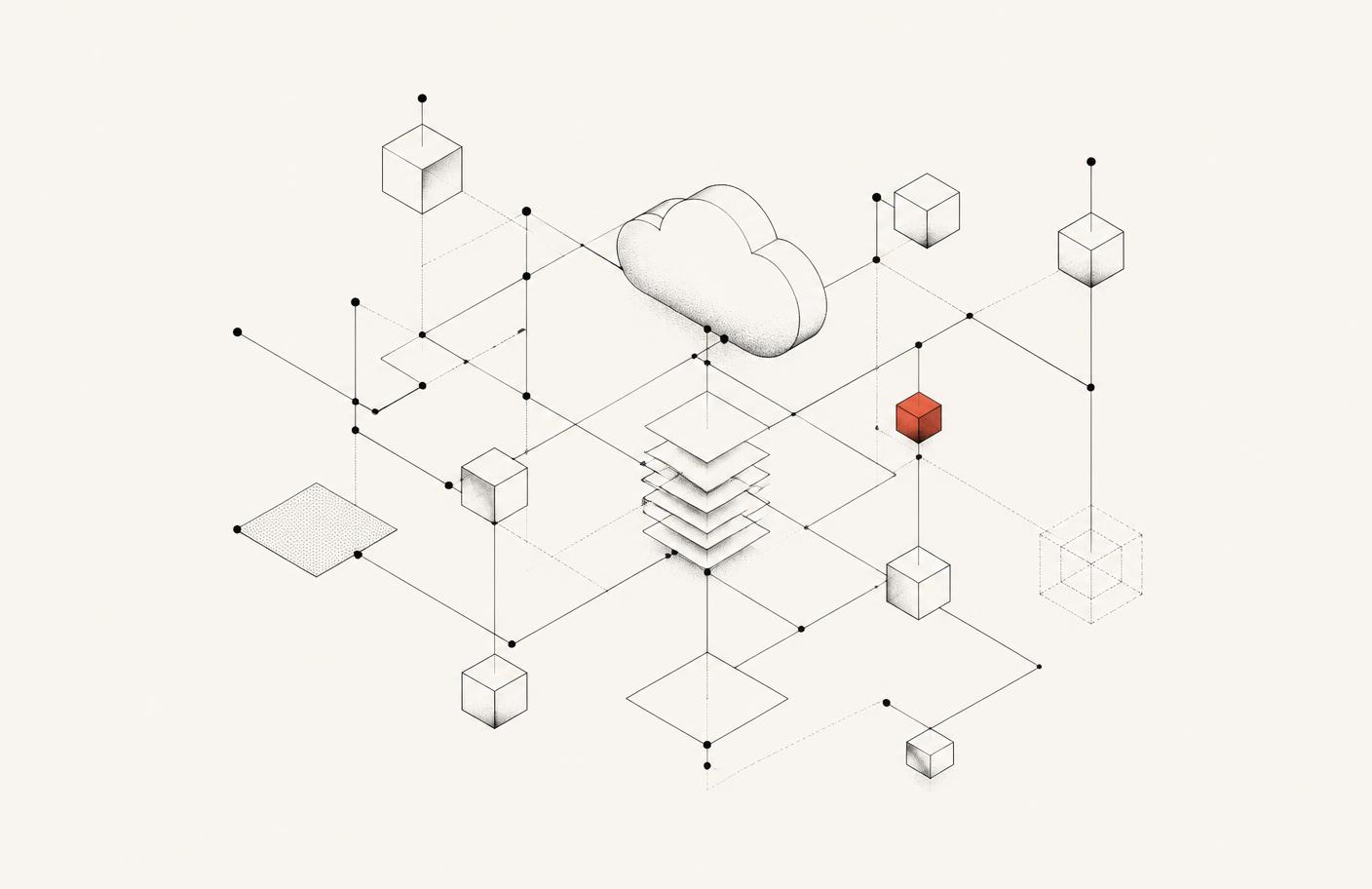
Diagram of cloud services, storage layers and data connections

Fig. 01 — Architecture as a shared reference

13Security

Built in, not added

Authentication, authorisation, input validation, encrypted transport and least-privilege infrastructure are designed with the feature. Dependencies are updated on a schedule and secrets are held in managed storage. Where a system processes personal data, collection, retention and deletion paths are defined before launch.

Testing

Coverage is planned according to the cost of failure. Unit tests protect business logic, integration tests protect boundaries, and end-to-end tests protect the flows a business depends on. Automated suites run on every change, and manual testing is used for judgement rather than repetition.

Maintenance

After release we monitor, patch, tune and extend. Incidents are documented with root cause and correction; recurring problems are traced to their source. Documentation and runbooks are kept current so the system remains operable by your own team.

14Frequently asked questions

About working with us

01Can services be engaged separately?
Yes. Each service can be delivered on its own — a design engagement, a testing engagement, a cloud migration — or combined into full delivery of a system.
02How are projects estimated?
After scoping, we provide a stage-based estimate with the assumptions written down. Where uncertainty is high, we propose a short discovery phase first so the estimate is based on findings rather than guesses.
03Do you work with our internal developers?
Regularly. We can follow your process, review standards and branching model, or propose changes if you ask for them. Knowledge transfer is planned into the engagement rather than left to the end.
04What is required from our side?
A person who can answer questions about the business process and approve decisions, access to the relevant systems, and availability for regular reviews of the working software.
05How is confidential information handled?
Access is limited to the engineers on the engagement and revoked when it ends. Credentials are kept in managed secret storage, and client information is not used outside the engagement.
06Can you take over a system built by someone else?
Yes. We start with a review of the code, infrastructure, tests and documentation, then present the findings and a plan separating urgent risks from longer-term improvements.

15Contact

Discuss a service

Email
charlenewebb1989@gmail.com
Website
termotte.com